
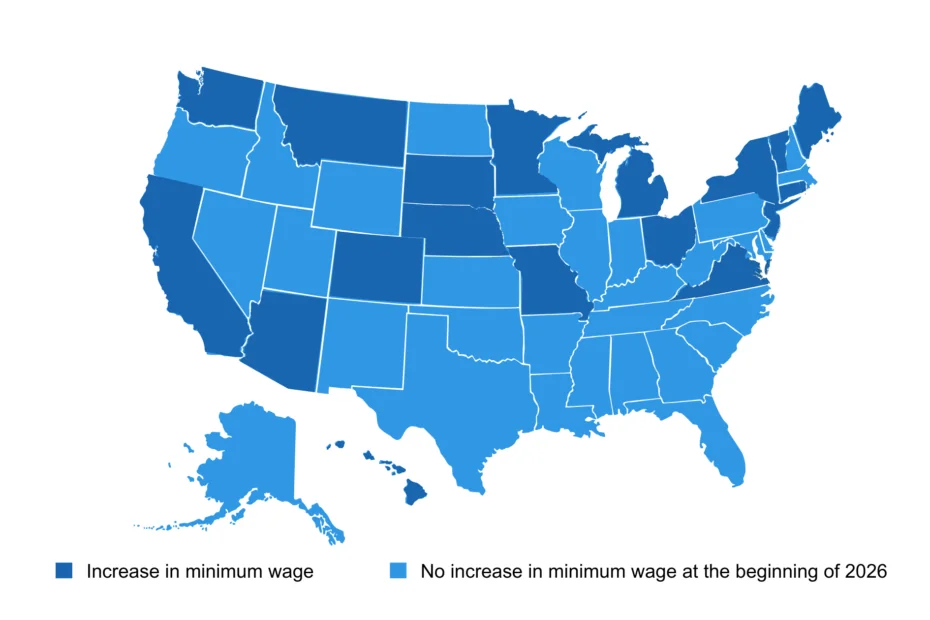
As the new year begins, millions of American workers will see changes to their minimum hourly wages—but not due to federal action. Instead, most wage movement is occurring at the state and local levels, creating a patchwork of laws aimed at keeping pace with inflation and rising costs of living.
Effective January 1, 2026, numerous states implemented automatic or legislated minimum wage increases. Below is a snapshot of several notable changes:
- Michigan: Increased from $12.48 to $13.73 per hour, part of a phased plan that will reach $15.00 by 2027.
- Ohio: Raised its minimum wage from $10.70 to $11.00 per hour, with a corresponding increase to the tipped wage.
- Connecticut: Increased from $16.35 to $16.94, maintaining its position among the highest state minimum wages in the country.
- Washington: Raised to $17.13 per hour, continuing to hold the highest statewide minimum wage nationwide.
- Virginia: Increased from $12.41 to $12.77, reflecting an adjustment indexed to inflation.
Beyond state floors, many cities and counties also enacted increases effective January 1, 2026. For example, Flagstaff and Tucson in Arizona and several California cities adjusted local minimum wages upward for 2026. In total, 68 jurisdictions – including 19 states and 49 localities – are raising minimum wages at the start of 2026.
Download a copy of the minimum wage increases here.